
Concrete Polishing Services in Sonoma County, CA
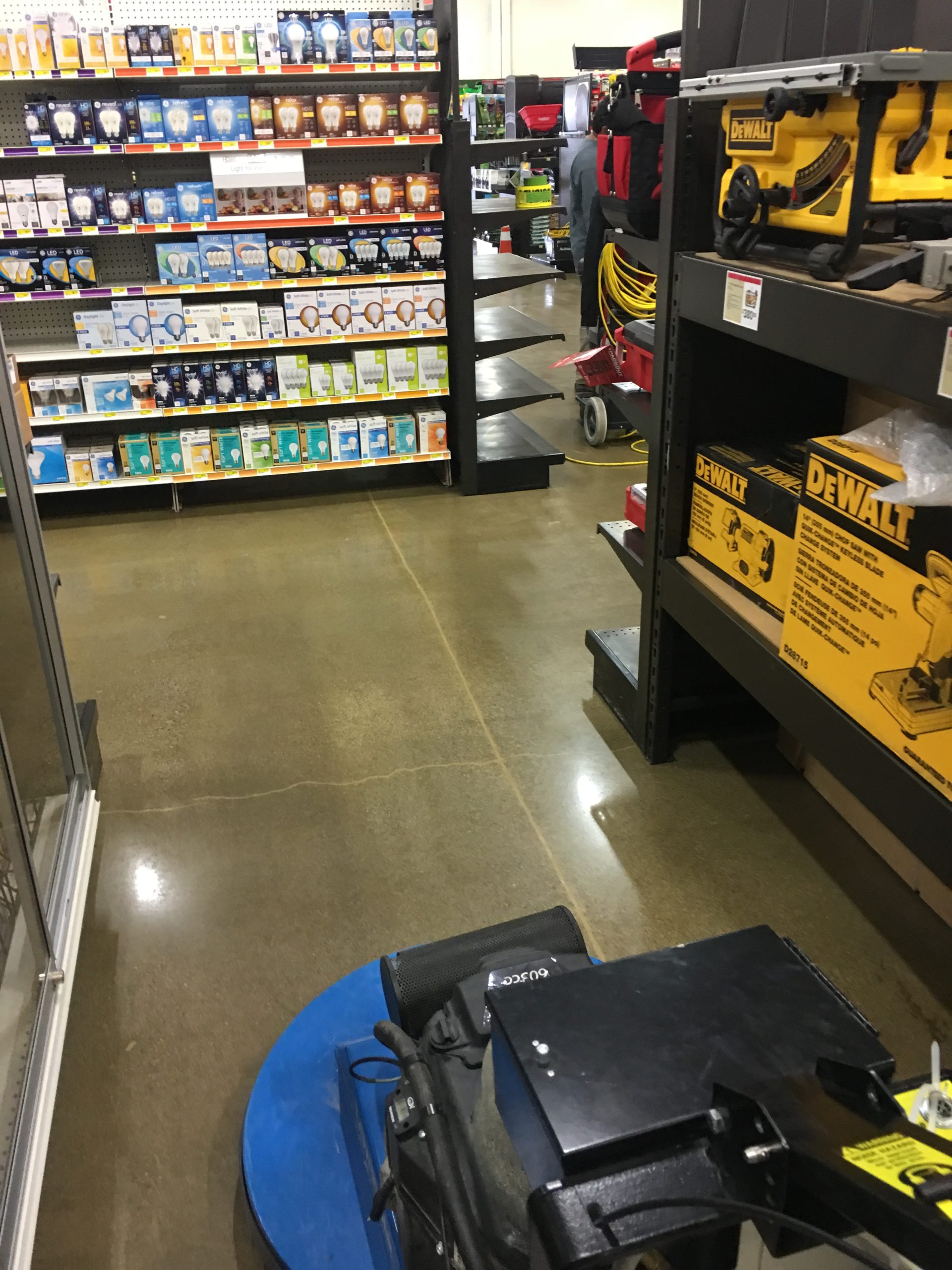
That dusty, stained slab in your Sonoma County winery, showroom, or garage is hiding a finished floor. Mechanically polished concrete turns raw slabs into hard, light-reflective, low-maintenance surfaces that hold up to forklifts, wine barrels, foot traffic, and everything Santa Rosa summers throw at them. J&C Concrete polishes and coats floors across the North Bay, specializing in getting a consistent, controlled finish out of the imperfect concrete most Sonoma County properties actually have.
What concrete polishing involves
Concrete polishing is a mechanical process, not a coating. We use planetary grinders fitted with progressively finer diamond tooling — typically starting at 30 or 40 grit metal-bond diamonds to open the slab and remove old coatings, glue, or surface imperfections, then stepping up through 80, 150, 400, 800, and 1500/3000 grit resin-bond pads to refine the surface.
Between grinding steps we apply a lithium-based densifier that reacts with the concrete to harden the surface, and a stain guard to resist oil, wine, and water. The result is a floor that is part of the slab itself — no peeling, no delamination, no re-coating every few years.
A typical Sonoma County job includes: initial slab assessment, crack and joint repair with semi-rigid polyurea filler, coarse grinding, densifying, honing through mid-grits, staining if desired, final polishing to the chosen sheen (satin, semi-gloss, or high-gloss), and sealing. Winery tasting rooms, retail showrooms, warehouses, and residential garages all polish differently — slab age, aggregate exposure level, and moisture drive the plan.
Why J&C Concrete for concrete polishing
- An experienced team that has dialed in Sonoma County slab conditions specifically
- Three levels of aggregate exposure offered: cream (no aggregate), salt-and-pepper (light), and full aggregate — you choose the look before we grind
- Four sheen levels available, from matte satin to high-gloss reflective
- Semi-rigid polyurea crack and joint filler used on every job — the industry standard for polished floors, not cheap caulk
- References from wineries, retail spaces, and homes throughout Sonoma, Napa, and Solano counties
- We only quote what we can actually deliver — if your slab is too soft or too damaged to polish well, we’ll tell you and recommend an overlay or coating instead
Our concrete polishing process
- Site visit and slab assessment. We look at slab hardness (Mohs test), moisture, existing coatings, cracks, and finished floor height requirements before quoting.
- Written scope and quote. You get a fixed price with aggregate exposure level, sheen level, and stain color spelled out.
- Prep and repair. Furniture out, existing coatings removed, cracks and control joints filled with semi-rigid polyurea.
- Coarse grinding. Metal-bond diamonds open the slab to your chosen aggregate exposure.
- Densify and stain. Lithium densifier applied; acid or water-based stain applied if the design calls for color.
- Hone and polish. Progressive resin pads through 1500 or 3000 grit to reach your specified sheen.
- Seal and hand off. Stain guard applied, floor walked with you, and simple maintenance instructions provided.
What concrete polishing typically costs
Polished concrete is priced by the square foot, and the range is wide because the work varies. Estimates depend on: square footage (larger jobs cost less per foot), aggregate exposure level (full aggregate takes more grinding), sheen level (a 3000-grit high-gloss takes more passes than a satin finish), whether the slab has existing coatings, glue, or paint to remove, crack and joint repair scope, and whether you want stain or dye added.
Warehouses and open winery floors sit at the lower end per square foot. Residential garages, retail interiors, and any job with heavy prep, tight cuts around fixtures, or decorative staining sit higher. We don’t publish a flat rate because quoting sight-unseen usually means someone gets surprised on invoice day. Free on-site quotes across Sonoma County — we’ll measure, test the slab, and give you a real number.
Service areas we cover
- Santa Rosa
- Petaluma
- Sonoma
- Healdsburg
- Rohnert Park
- Windsor
- Sebastopol
- Cotati
- Glen Ellen
- Kenwood
We also polish floors throughout Napa and Solano counties — Napa, Yountville, Vallejo, Fairfield, Vacaville, and Benicia.
FAQ
Polished concrete floors vs epoxy — which is better?
Neither is universally better; they solve different problems. Polished concrete is the slab itself, hardened and refined, so it never peels or delaminates and needs almost no maintenance. Epoxy is a coating on top of the slab — better for hiding damaged concrete, easier to color uniformly, and warmer underfoot, but it will eventually wear and need re-coating. Wineries and showrooms with sound slabs usually choose polishing. Garages with cracked or stained slabs usually choose vinyl chip epoxy.
How long does polished concrete last?
The polish itself is permanent — it’s ground into the slab. The stain guard on top typically needs re-application every 3 to 7 years depending on traffic. With basic maintenance (dust mop plus occasional pH-neutral cleaner), a polished floor easily lasts the life of the building.
Can you polish an old or cracked slab?
Often yes. Cracks and joints get filled with semi-rigid polyurea, and moderate spalling can be ground out. Very soft slabs (low Mohs hardness) or slabs with severe damage may polish poorly — in those cases we’ll recommend a polymer overlay first, then polish the overlay, or switch to a coating system.
How much dust and mess is involved?
We run HEPA-filtered dust extraction on every grinder, so polishing is nearly dust-free. Wet polishing steps do produce slurry, which we contain and clean up before we leave.
How long will my Sonoma County business be down?
Most commercial jobs take 3 to 7 working days depending on square footage and staining. We can phase larger winery or warehouse floors to keep sections operational.
Do you polish residential garage floors?
We do, though most homeowners get a better result from vinyl chip epoxy on a garage slab. We’ll walk you through both options honestly at the quote.
Ready for a floor that looks finished the day we leave and stays that way? Call J&C Concrete at (707) 307-6984 or request a free on-site quote for concrete polishing anywhere in Sonoma County. We’ll assess your slab, show you samples of aggregate exposure and sheen levels, and give you a straight answer on what your floor can become.